Your First Bite Matters More Than You Think
In my opinion, the most important factor that can be influenced by our diet is blood sugar.
Chronically high blood sugar is what leads to prediabetes and diabetes. About 1 in 3 Americans are affected by blood sugar dysregulation, and over time this can contribute to complications like kidney disease, lower limb amputations, and vision loss.
Statistics aside, maintaining stable blood sugar is key to having consistent energy throughout the day. One of the simplest ways to support this is by paying attention to your first bite!
For example, your first bite of a meal should be veggies or protein. Veggies typically take longer to eat, which gives your digestive system a chance to “wake up” and start releasing hormones that support digestion and help stabilize blood sugar. By the time you move on to protein and then carbs, your body has had more time to begin releasing insulin so glucose can enter cells in a more controlled way and support steady energy.
If your first bite is something high in carbs, your blood sugar rises quickly. Your body releases insulin in phases, and when glucose enters the bloodstream too fast, it can outpace that initial insulin response. This can lead to a higher spike, followed by a sharper drop in blood sugar and a noticeable dip in energy. Over time, these repeated spikes and crashes can put stress on the system and contribute to insulin resistance.
This is also why you might find yourself reaching for something sweet soon after eating. It’s not random, it’s just your body reacting to that spike and crash. What you actually need in that moment is something more balanced, like protein or fiber.
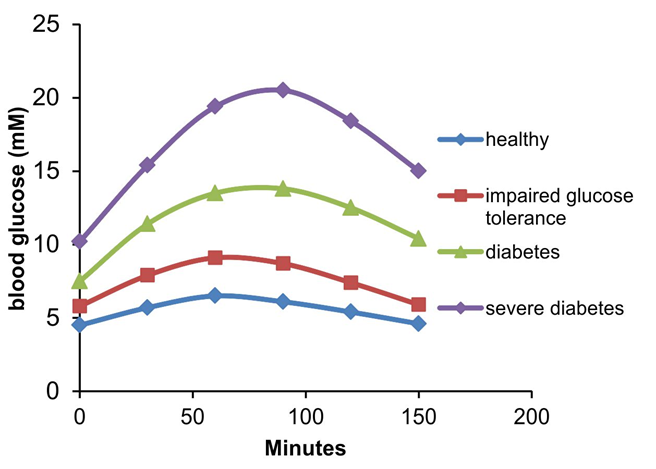
This visual shows how the body handles the same amount of glucose differently depending on metabolic health.
So the next time you go to eat lunch, try slowing down. Make your first bite veggies, then protein, then carbs, and see what happens!
Let me know how it goes and if you feel a difference ☺︎
I’ll go deeper into this in future posts, like:
Most people aren’t getting enough fiber
What a balanced plate actually looks like
GLP-1, appetite, and why hunger isn’t a willpower issue
References
American Diabetes Association. Understanding carbohydrates.
https://diabetes.org/food-nutrition/understanding-carbs
Harvard T.H. Chan School of Public Health. Carbohydrates and blood sugar.
https://www.hsph.harvard.edu/nutritionsource/carbohydrates/carbohydrates-and-blood-sugar/
Shukla, A. P., Andono, J., Touhamy, S. H., et al. (2017). Carbohydrate-last meal pattern lowers postprandial glucose and insulin excursions.
https://drc.bmj.com/content/5/1/e000440
Reynolds, A., Mann, J., Cummings, J., et al. (2019). Carbohydrate quality and human health.
https://pubmed.ncbi.nlm.nih.gov/30638909/
Wageningen University & Research. (n.d.). Glucose tolerance curves.
https://www.edx.org/course/nutrition-and-health-macronutrients-and-overnutrition